
Human-Centric AI Development: Why Culture is the Real Engine of Adoption
As we move through 2026, the global economy is witnessing a striking paradox: while 92% of companies plan to increase AI investments, a mere 1% of leaders classify their organisations as truly "mature" in their deployment. This gap exists because the primary barrier to AI transformation is not silicon, but biology.
For small and medium-sized enterprises (SMEs), success depends on the human capacity to adapt, trust, and integrate these systems into daily workflows. If you build with people in mind, adoption follows; if you treat AI as a "plug-and-play" software update, you risk falling into "pilot purgatory".
Breaking the "Silicon Ceiling"
A critical phenomenon in the current workforce is the Silicon Ceiling—a stark divide in AI usage based on hierarchy. While usage rates among executives and managers often exceed 75%, frontline employee adoption has stalled at approximately 51%.
This disconnect happens when leadership, emboldened by their own success with AI, mandates strategies that fail to account for the friction and psychological threat felt by frontline workers. To shatter this ceiling, AI must be introduced not as a "black box" mandate, but through visible leadership support and relevant use cases.
Psychological Safety: The Bedrock of Transformation
Successful AI transformation requires an upgrade to your "organisational operating system"—your culture. This begins with Psychological Safety: the shared belief that a team is safe for interpersonal risk-taking.
- The Threat State: When employees fear AI will replace them, the brain’s amygdala activates, inhibiting the prefrontal cortex and making upskilling physically impossible.
- Intelligent Failure: AI models are probabilistic and occasionally "hallucinate". In high-safety cultures, these errors are treated as "Intelligent Failures"—data points used to refine the system—rather than reasons for punishment.
- Learning Velocity: Teams that feel safe achieve a higher learning velocity, which is the primary competitive advantage in the agentic era.
The "Golden Ratio" of Automation (60/30/10)
To move beyond viewing AI as a simple cost-cutting tool, we utilise a design principle known as the Golden Ratio. This heuristic helps partition work between agents and humans to manage anxiety and expectations
A Note on Our Methodology: This 60/30/10 design principle was first coined by our mentors at True Horizon AI. We would like to acknowledge Nate Herkelman and the True Horizon team for their invaluable guidance in helping us architect these human-centric automation frameworks.
The IKEA Effect: Co-Creation Over Mandates
We leverage the IKEA Effect—the cognitive bias where people value what they partially created—to drive adoption. Rather than deploying finished tools, we involve frontline workers in Participatory Design.
When workers help map their own workflows and identify their own "pain points" during design sprints, the resulting tool is no longer "Management's AI," but "Our AI". This ownership reduces resistance and ensures the system handles real-world "edge cases" that engineers might otherwise miss.
Measuring What Matters
To sustain a human-centric transformation, SMEs must look beyond simple headcount reduction, which is a morale killer. Instead, we use a Three-Metric Scorecard:
- Value: Hard ROI, such as revenue uplift or reduced cost-to-serve.
- Quality: Accuracy, error rates, and customer satisfaction (CSAT).
- Adoption: Weekly Active Users (WAU) and, crucially, employee sentiment.
By tracking sentiment and "Time Reinvested," you transform AI from a source of anxiety into an engine of resilience.
References (APA Style)
- BCG. (2025). AI at work 2025: Momentum builds, but gaps remain. https://www.bcg.com/publications/2025/ai-at-work-momentum-builds-but-gaps-remain
- Edmondson, A. C. (2025). The intelligent failure that led to the discovery of psychological safety. Behavioral Scientist. https://behavioralscientist.org/the-intelligent-failure-that-led-to-the-discovery-of-psychological-safety/
- Herkelman, N. (n.d.). The 60/30/10 rule for AI implementation. True Horizon AI. https://www.truehorizon.ai/
- McKinsey & Company. (2026). Superagency in the workplace: Empowering people to unlock AI's full potential. https://www.mckinsey.com/capabilities/tech-and-ai/our-insights/superagency-in-the-workplace-empowering-people-to-unlock-ais-full-potential-at-work
- Microsoft. (2026). Global AI adoption in 2025 – AI Economy Institute. https://www.microsoft.com/en-us/corporate-responsibility/topics/ai-economy-institute/reports/global-ai-adoption-2025/

Get the latest AI strategies
& case studies
No hype, just real-world experience delivered to your inbox.
Insights that drive transformation
Explore cutting-edge AI strategies and real-world automation insights
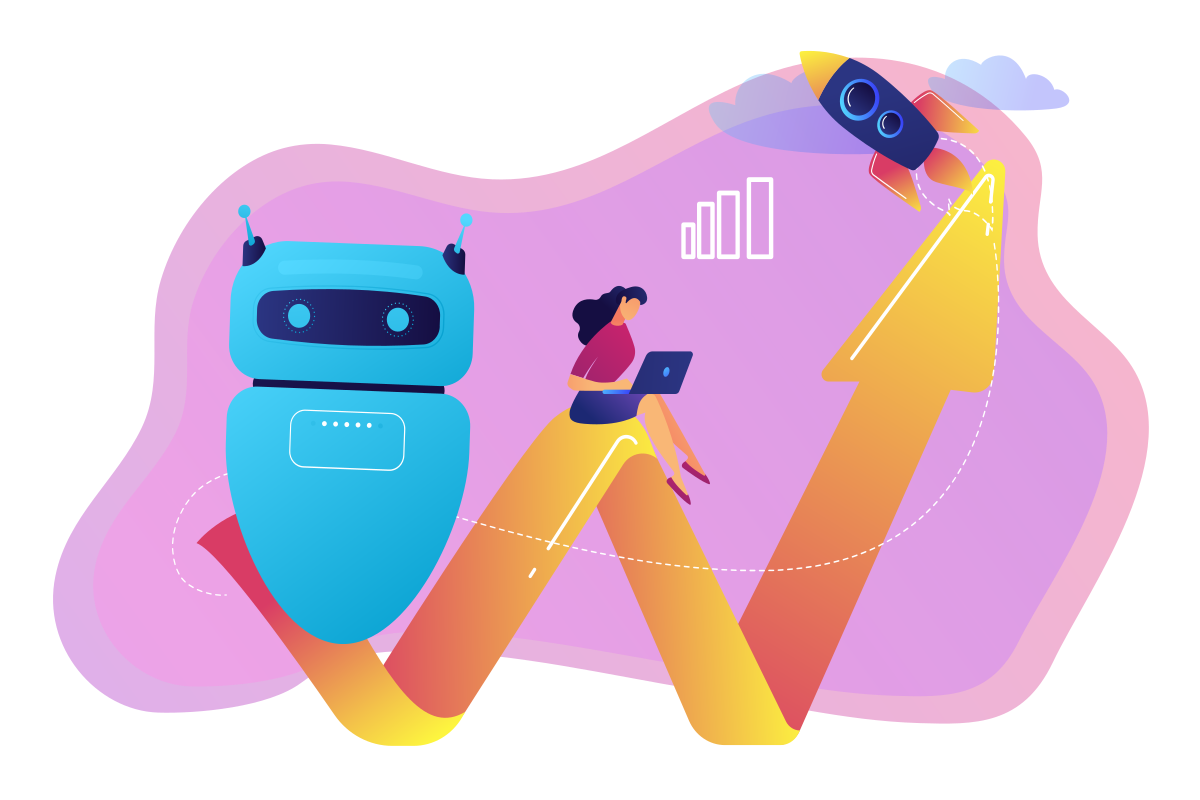
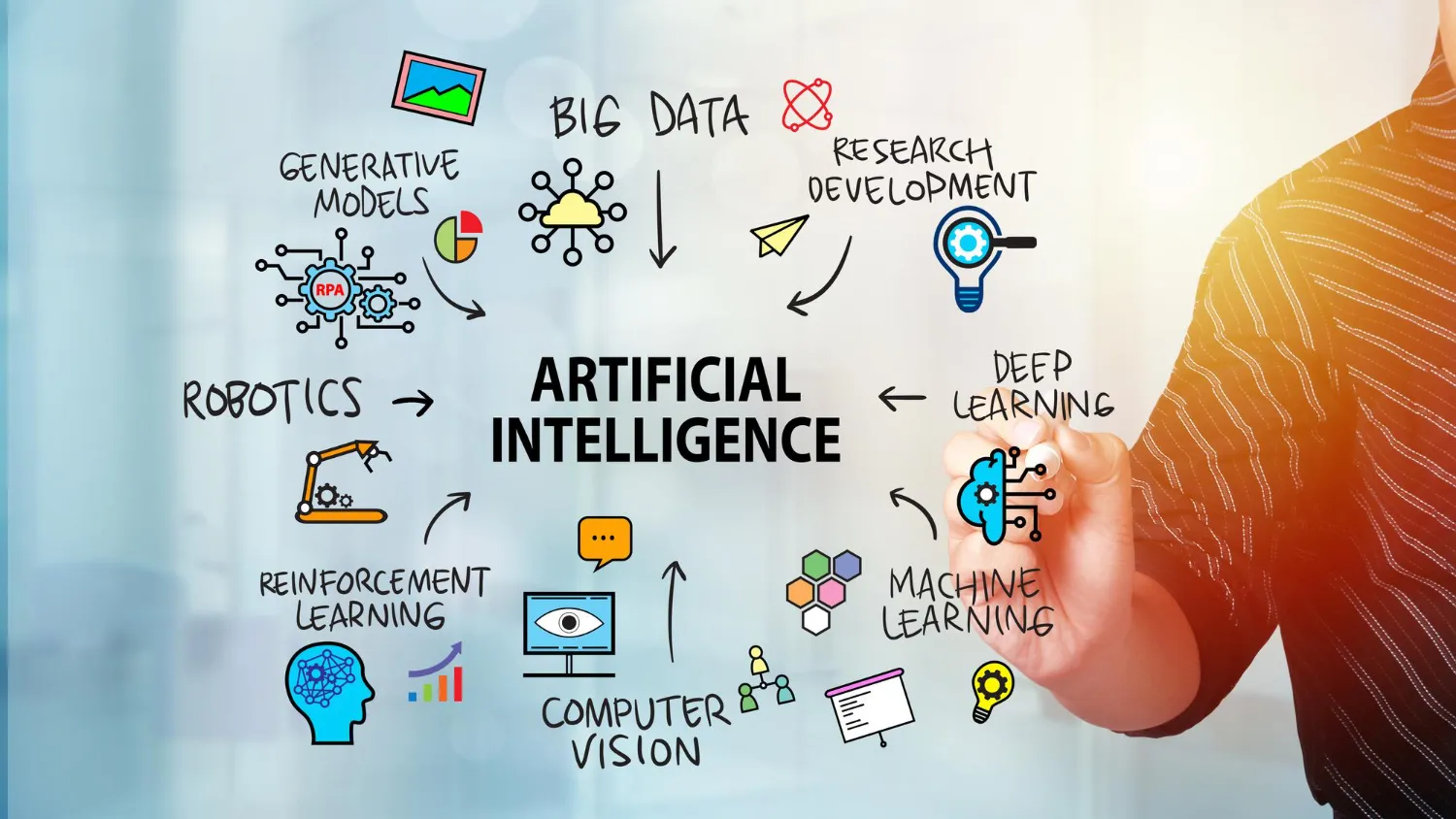

Intelligent AI systems redefines human potential - break through tech barriers and reimagine the future of work.
Measuring the impact of intelligent automation
Data drives transformation. Our metrics reveal the true potential of AI integration. Quantifiable insights unlock strategic opportunities for businesses.
Workflow efficiency gains
Streamline operations through intelligent system design
Strategic productivity boost
Enhance decision-making with AI-powered insights
Innovation acceleration
Unlock new possibilities with adaptive AI technologies
Ready to transform
your business today
Discover how intelligent AI agents can revolutionize your operational efficiency.